
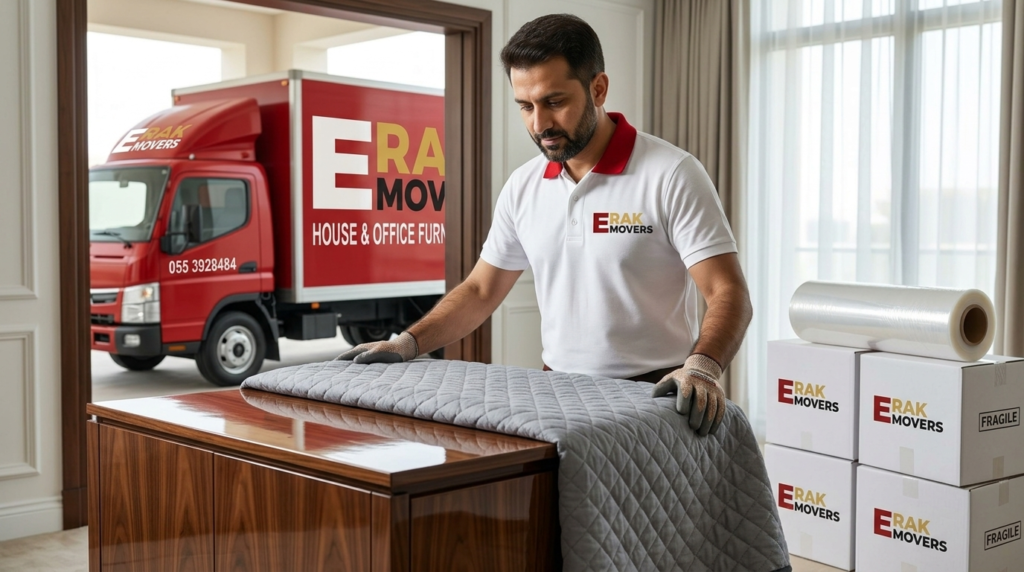
A table can arrive without a broken leg or chipped corner and still look different. Once the wrapping comes off, you might notice cloudy patches, dull lines or an impression across the polished surface.
The packing material touching your furniture matters. Stretch film is useful during a move, but direct contact, trapped moisture and excessive pressure can create problems on sensitive finishes. Here is how to choose suitable protection for polished wood, lacquer, leather and upholstery before your move in Ras Al Khaimah.
Does Stretch Film Damage Furniture?
Stretch film can mark some furniture finishes, particularly when applied directly to sensitive surfaces, pulled tightly or left around damp furniture. Damage is not inevitable. The finish, its condition, wrapping pressure, temperature and time spent wrapped all affect the outcome.
A fully cured, durable coating does not behave like a recently refinished tabletop. Likewise, a dry cabinet wrapped for a short journey faces different conditions from furniture left tightly covered in unsuitable storage.
The useful question is therefore:
- What will touch the surface, and is it suitable for that finish?
Ordinary moving stretch film generally clings to itself without packing-tape adhesive. A sticky patch after unpacking does not automatically mean glue transferred from the film. The finish itself may have softened, or another packing product may be responsible.
Why Film Can Trap Moisture Against a Finish
Overlapping plastic layers restrict air exchange and can slow the escape of moisture already present in furniture or its coverings.
That moisture might come from recent cleaning, a damp moving blanket or exposure during loading. Wrapping does not create water, but it can keep a damp surface from drying normally.
Condensation is a separate process. It occurs when a surface is cold enough for moisture in the surrounding air to condense on it. Moving cool furniture into warm, humid air can create those conditions; temperature changes do not automatically cause condensation in every wrapped item.
For a household move, the practical steps are straightforward:
- Allow cleaned furniture to dry fully before packing.
- Check that blankets and protective covers are dry.
- Avoid leaving wrapped pieces outside unnecessarily.
- Tell the movers if furniture will remain packed in storage.
- Agree on when and where temporary transport wrapping will be removed.
A blanket underneath the film helps separate the plastic from the finish. However, completely covering that blanket in plastic still restricts ventilation. The inner layer does not make the whole package breathable.
Which Furniture Surfaces Need Extra Care?
The surface coating matters as much as the material underneath it. Two wooden tables can need different packing methods because their finishes differ.
| Surface or finish | Main concern | What to check before wrapping |
|---|---|---|
| Lacquered furniture | Surface impressions, sticking or changes in sheen | Finish type, condition and manufacturer’s instructions |
| French-polished wood | Sensitivity to moisture, heat and contact | Whether specialist packing is needed |
| Recently refinished furniture | A coating that has not fully cured | The refinisher’s approved wrapping date and materials |
| Waxed surfaces | Smearing or changes in appearance | Compatibility of the contact layer |
| Veneered furniture | Damage to the finish or vulnerable veneer edges | Existing lifting, chips and edge protection |
| Leather | Pressure marks, moisture and surface sensitivity | Leather type and care instructions |
| Textured upholstery | Flattened pile, creases or colour transfer | Fabric type and suitable protective covering |
Veneer is a thin layer of wood, not a particular finish. It should not automatically be treated as incompatible with every plastic product. Its coating and condition determine the appropriate surface protection.
Similarly, “polished wood” can describe several different treatments. If you cannot identify the finish, share the care label, purchase information or restoration history with the packing team.
What Stretch Film Is Correctly Used For
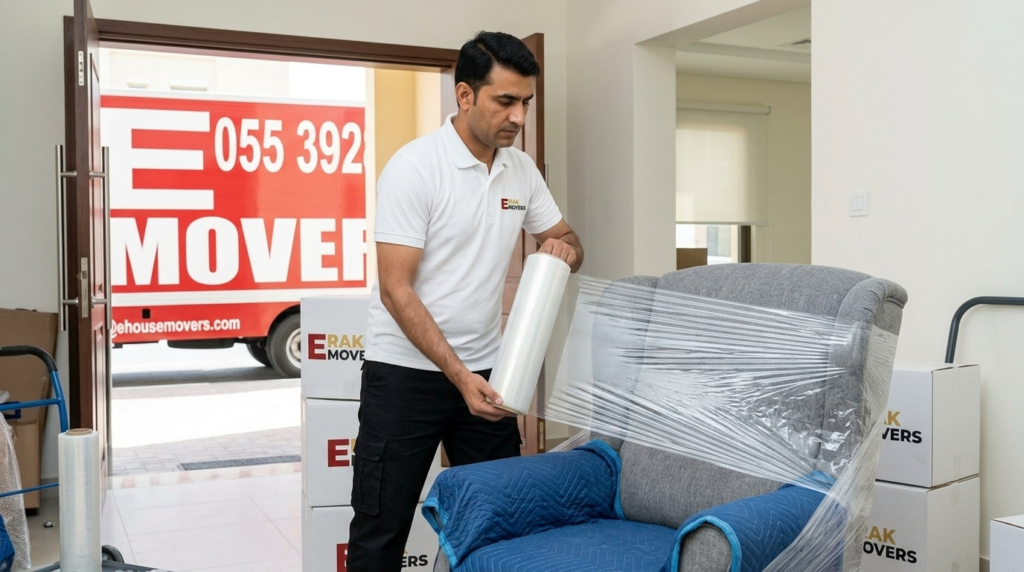
Stretch film can help hold protective materials together and keep suitable packages organised.
Useful applications include:
- Holding padding around an already protected component.
- Bundling lightweight, individually wrapped furniture parts.
- Keeping external protective covers in position during handling.
- Grouping suitable cartons without hiding their labels.
- Providing an additional outer barrier where the packing plan calls for it.
It should not replace cushioning, edge protection or load restraints.
Wrapping a cabinet repeatedly does not make its joints stronger. Film also cannot prevent a poorly supported panel from bending under another item’s weight.
Use appropriate restraint methods for transport, and keep tape on the outer packaging rather than directly on furniture. Avoid tightening film so much that it compresses corners or leaves pressure lines.
Moving stretch film and heat-shrink packaging are different products. Do not apply heat to an ordinary furniture-wrapping job.
What to Use Instead on Polished Wood
For sound, fully cured finishes, the packing plan usually starts with a clean, smooth, non-abrasive contact layer, followed by cushioning and protection for vulnerable edges.
A suitable sequence is:
- Inspect the finish
- Check cleanliness and dryness
- Choose a compatible contact layer
- Add clean moving blankets or suitable padding
- Protect corners and projecting details
- Secure the outer packaging
- Plan unpacking
A moving blanket is not automatically safe simply because it feels thick. Dirt, rough fibres and prominent stitching can damage a delicate finish.
Flaking, sticky or recently restored surfaces need specialist advice. Even soft fabric can leave an impression if pressed against an unstable coating.
For valuable or unusually delicate pieces, discuss the surface condition when arranging fragile-item moving services. Clear photographs help identify where ordinary wrapping may be unsuitable.
What to Use Instead on Leather and Upholstery
Start with a clean, dry cover appropriate to the leather or fabric. A breathable protective cover can provide separation from dust and handling without tightly compressing the entire piece.
For leather furniture, check the manufacturer’s guidance before choosing the material that will touch it. Avoid applying conditioner immediately before wrapping unless the product instructions specifically allow it.
For upholstered furniture:
- Allow recently cleaned fabric and internal padding to dry thoroughly.
- Use covers that will not transfer colour.
- Protect exposed wooden feet and trims separately.
- Avoid tight bands across soft cushions.
- Keep heavy cartons off seats and armrests.
- Give textured fabrics enough space to avoid prolonged compression.
Storage requires its own plan. Packaging suitable for a brief journey may not be suitable for weeks in a storage unit.
Ask about the storage environment, inspection arrangements and whether temporary transport film will be removed. Breathable fabric alone cannot compensate for damp furniture or unsuitable storage conditions.
How to Check Whether Wrapping Has Marked a Surface
Inspect furniture during unpacking in good light. View reflective surfaces from several angles and compare them with photographs taken before packing.
Look for:
- Dull bands that follow wrapping overlaps.
- Cloudy or whitish patches.
- Impressions matching folds, seams or padding.
- Unexpected sticking as a covering is lifted.
- Colour transferred onto the packing material.
- Flattened fabric or pressure lines on upholstery.
These signs do not prove that stretch film caused the problem. Moisture, pressure, previous damage and other packing materials can produce similar effects.
If a covering sticks, stop pulling. Do not try solvents, abrasive cleaners, heat or vigorous rubbing on an unidentified finish. Photograph the area and seek advice from the furniture manufacturer or a qualified restorer.
Notify the mover promptly and retain relevant packaging, photographs and booking documents. The UAE Ministry of Economy and Tourism’s consumer complaint service requests supporting records such as invoices or contracts when reviewing a complaint.
Choose the Right Contact Layer Before Wrapping Your Furniture
Safe furniture packing starts with the finish beneath the wrapping. Identify sensitive surfaces, check that everything is dry and agree on compatible materials before the first layer goes on.
For your move with RAK E Movers, highlight recently polished, restored or delicate furniture during the survey. A suitable contact layer, controlled pressure and a clear unpacking plan help protect the appearance as well as the structure of each piece.