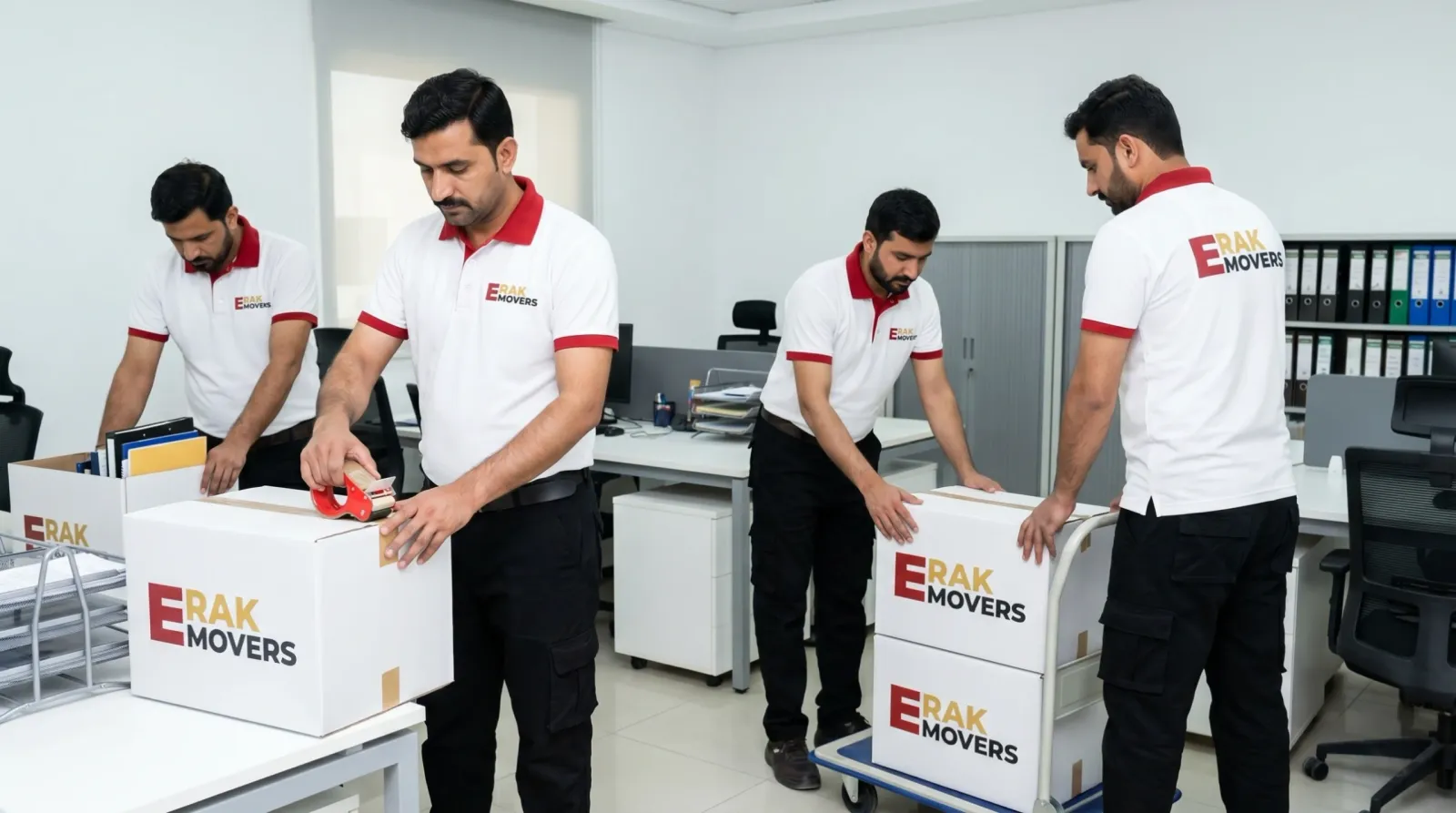
Loading and Unloading Services in Ras Al Khaimah
When You Have Arranged Everything Else, the Crew at the Truck Is the Part That Cannot Improvise
Professional Loading and Unloading Across All Ras Al Khaimah Addresses Trained Crews, Right Equipment, Safe Sequence, and Floor Protection. Labour-Only Bookings, Container Loading, Delivery Reception, Storage Facility Moves, and Same-Building Transfers.
RAK E Movers controls loading sequence heaviest boxes loaded first, systematic packing prevents transit damage. Appliances transported upright with manufacturer settling time. Crew training, proper equipment, documented handling prevent compressor failure. Professional packing and unpacking services, technique-driven protection across Ras Al Khaimah.
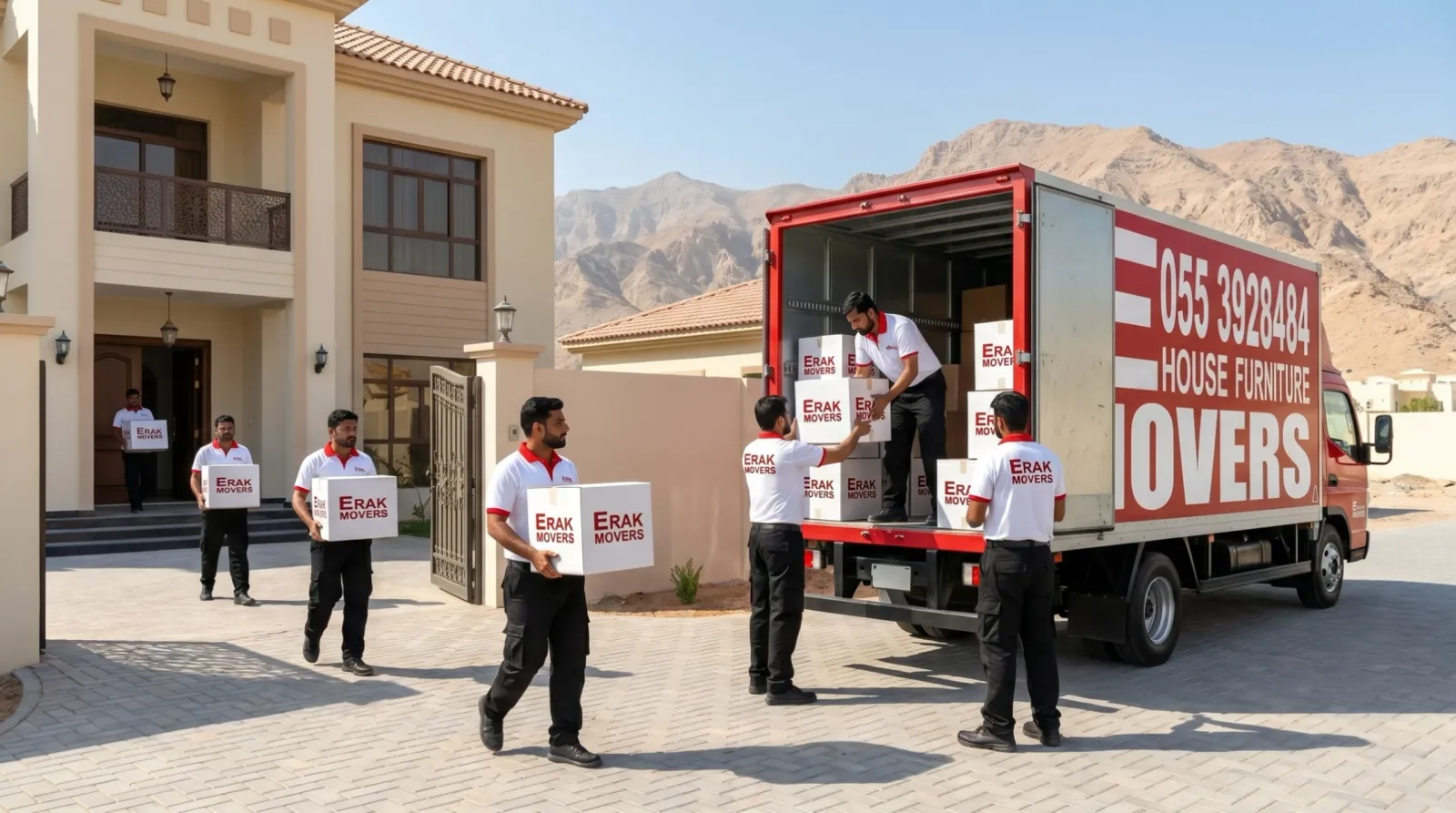
Sequence, Equipment, Technique—What Determines Safe Arrival
Ras Al Khaimah residents who organize their own move need trained crew for loading and unloading only. RAK E Movers provides loading teams with correct equipment, executing customer-organized moves. Professional loading and unloading services, crew expertise, partial-scope moving across Ras Al Khaimah.
The Load Sequence
Professional loading crew plans vehicle sequence before first item loads: heaviest items to base, progressively lighter toward rear, fragile items in protected positions. Sequence planned backward from destination last unload rooms loaded first. RAK E Movers' loading and unloading services execute planned sequences. Professional crew, vehicle expertise, destination-driven coordination across Ras Al Khaimah.
The Equipment Requirement
Hardwood wardrobes without furniture dollies risk floor marks, joint failure, or excessive crew size. Professional loading and unloading services use correct equipment—dollies, sliders, protective wrapping. Trained crew with proper equipment achieves safe transport. Untrained crew improvises risking damage. RAK E Movers provides equipment-backed furniture moving across Ras Al Khaimah. furniture movers, loading and unloading services.
The Floor Protection Discipline
Marble, tile, engineered wood vulnerable to equipment damage. Floor protection applied before movement prevents marks, chips, scratches zero landlord deductions. Professional loading and unloading services with complete floor protection across Ras Al Khaimah.
The Manual Handling Discipline
Back injuries result from loads exceeding safe single-person limits without mechanical assistance and from angles concentrating weight on lumbar spine. Trained loading crews apply dollies and lift straps before manual carry, not after discovering weight excess. Professional loading and unloading services use mechanical assistance protocols, preventing crew injuries and property damage across Ras Al Khaimah. Untrained crews risk serious back injuries through manual-only approaches.
What Arrives With the Crew and What Each Tool Prevents
Every RAK E Movers loading and unloading crew departs for the job with a confirmed equipment set matched to the specific booking's item inventory and building access profile. The equipment is not what happens to be in the van. It is what the booking assessment confirmed is required for the specific items and the specific access conditions.
Four-Wheel Furniture Dollies
Four-wheel dollies move up to 400kg across flat surfaces without dragging or manual carrying. On Ras Al Khaimah marble and polished tile floors, soft rubber wheels prevent floor damage that triggers maintenance repairs. Professional loading and unloading services use dollies for wardrobe transfers, sofa moves, appliance relocations, heavy carton stacks between property and vehicle. Equipment-backed approach eliminates floor marks, crew injuries, transit delays across Ras Al Khaimah.
Two-Wheel Appliance Hand Trucks
Handle vertical loads refrigerators, washing machines, tumble dryers, dishwashers, filing cabinets, and heavy carton stacks on staircase approaches, vehicle ramps, and loading dock transitions. Appliance hand trucks are rated for the load weight and prevent the forward-tip failure mode that is the most common cause of major appliance damage during residential and commercial loading operations. The adjustable belt strap on an appliance hand truck secures the item to the truck throughout the transit — not just during the initial lift.
Vehicle Ramp Systems
Bridge the gap between the vehicle floor and the ground level allowing furniture dollies and appliance hand trucks to transfer items between the vehicle and the ground without the vertical lift component that creates back injury risk and drop damage risk. In Ras Al Khaimah, kerb heights vary significantly between communities and building types, and some commercial addresses have no direct vehicle-to-entrance level access. Ramp systems convert every loading situation into a dolly-compatible transition.
Furniture Straps — Moving Straps and Ratchet Load-Securing Straps
Moving straps allow two crew members to safely carry loads requiring four manual lifts, distributing weight across shoulders rather than concentrating at grip points. Safer for staircase and corridor navigation. Professional loading and unloading services use ratchet load-securing straps inside vehicles, anchored to tie-down points, tensioned to prevent movement during transit. Load movement without securing straps causes majority of transit damage. RAK E Movers' equipment-backed approach prevents damage across Ras Al Khaimah.
Floor Protection — Runners, Threshold Mats, and Corner Guards
Floor protection is standard on every loading and unloading booking—entry mats, corridor runners, corner guards, freight lift protection. Professional loading and unloading services apply protection meeting Ras Al Khaimah building management requirements for permitted operations. Zero floor damage, building compliance, documented protection across Ras Al Khaimah.
Back Support Lifting Belts
Worn by all crew members during manual carry operations. Back support belts support the lumbar spine under manual carry loads — particularly relevant for the multi-trip staircase carries and overhead-angled loads that apartment and villa moves require — and serve as a physical reminder to apply correct lifting technique: bent knees, straight back, load held close to the body. The combination of correct technique and mechanical support reduces musculoskeletal injury risk for the crew and improves the control quality of the carry for the item being moved.
Furniture Blankets and Vehicle Interior Protection
Furniture blankets create the buffer layer between the loaded item and the vehicle wall, floor, and adjacent items during transit. Every item with a finished surface — polished wood, leather, fabric, glass panels, mirrored surfaces — travels in contact with a furniture blanket rather than with the vehicle interior surface or adjacent cargo. The blanket prevents abrasion between surfaces and reduces the transmission of road vibration to item surfaces during transit.
Six-Stage Loading Sequence Confirmed Before First Lift
Every loading and unloading booking follows documented six-stage process matched to item inventory and building access profile. Equipment and sequencing variables captured at right point. Items arrive intact because loading was planned, not improvised. Professional loading and unloading services with systematic approach across Ras Al Khaimah.
Booking Assessment
Studio and single-room loads assessed virtually from photos. Larger loads and commercial items assessed in-person within 48 hours. Assessment confirms: item inventory, building access, floor protection requirements, vehicle dimensions, specialist equipment needs, destination layout for unloading sequence. Professional loading and unloading services with documented planning across Ras Al Khaimah.
Written Fixed-Price Quote
A written, itemised quote is issued within 24 hours of the assessment. Crew size, session duration, equipment specification, and floor protection are all named. The quoted total is the invoiced total — no hourly rate overruns and no day-of additions for items visible at the assessment.
Floor Protection Deployment Before Movement Begins
Before a single item or piece of equipment crosses a floor threshold, the floor protection suite is deployed — entry mats at all entry points, corridor runners along the complete access route, corner guards at tight turns, and freight lift floor protection confirmed before the lift is used. Only when the protection route is confirmed does the crew begin moving items toward the vehicle.
Load Sequence Confirmation
The load sequence is confirmed before the first item leaves the property. The crew lead identifies: base layer items (heaviest and most structurally stable furniture and equipment), middle layer items (medium-weight furniture and stacked cartons), upper layer items (lightweight bulky items and fragile-protected cartons), and protected position items (artwork, mirrors, and specifically labelled fragile cartons). The sequence is communicated to the full crew before loading begins.
Systematic Loading With Progressive Load Securing
Items are carried to the vehicle in the confirmed sequence. Each item is checked for surface condition at pickup — any pre-existing mark confirmed with the customer before the item enters the vehicle. Furniture blankets are applied at the required positions. Load-securing straps are fitted progressively as each base layer row is completed — not applied en masse when the vehicle is full.
Load Completion Confirmation Before Departure
Before the vehicle door closes, the crew lead confirms: every item is in the planned position, every strap is correctly tensioned, every fragile item has surface protection and surrounding load support, and no item is free to move during transit. A condition confirmation of the completed load is made. The customer or vehicle operator confirms the load before the vehicle departs.
Loading and Unloading Services Cost in Ras Al Khaimah Transparent Pricing Before Booking
RAK E Movers publishes loading and unloading cost ranges before the quote — because a customer who has self-managed the rest of their move and needs a loading crew is the customer most likely to have done price research before contacting a provider. Four factors determine the quote: crew size and session duration, equipment requirement, access conditions, and item categories with specialist handling needs.
Studio / 1-Bedroom Items
2-Bedroom Apartment
3-Bedroom Apartment
3–4 Bedroom Villa
20ft / 40ft Container Loading
Single Heavy Item (Safe, Piano, Appliance)
Six Loading Standards That Protect the Items, the Property, and the People Doing the Work
The loading and unloading market in Ras Al Khaimah includes operators with different service levels, equipment, crew experience and pricing structures.
Floor Protection Is Applied Before Any Item Moves — Always
Floor protection deployment is a non-negotiable standard on every RAK E Movers loading and unloading booking — not an optional extra for properties with valuable floors. Entry threshold mats, corridor runners, freight lift floor protection, and corner wall guards are all deployed before the first item crosses a floor surface. This protection directly reduces the risk of landlord deductions from the origin property's security deposit and prevents building management disputes at either address.
The Load Sequence Is Planned Before the First Lift
The vehicle load sequence is confirmed before the crew begins carrying items — not established by loading whatever is nearest the door first and adjusting when the vehicle is half-full. The sequence reflects the item weight distribution, the fragile item protection requirements, and the destination floor plan that determines which rooms are unloaded first. A planned load sequence is the single most effective measure against transit damage that is caused not by road conditions but by items shifting against each other during braking and cornering.
Equipment Is Selected for the Specific Item — Not the Nearest Tool
The dolly type, the strap rating, and the ramp configuration used for each item in the loading scope are matched to that item's weight, form, and surface characteristics. A heavy marble tabletop and a lightweight dining chair are both furniture — they do not use the same equipment. The correct equipment is confirmed at the assessment stage and loaded onto the crew vehicle before departure.
Load Securing Is Applied Progressively — Not at the End
Furniture straps and load-securing equipment are applied to each layer of the load as it is completed — not to the full load once everything is in the vehicle. Progressive securing prevents the base layer from shifting while the upper layers are being placed, which is the most common cause of mid-transit load collapse in insufficiently secured residential moves.
Manual Handling Has a Weight Threshold — and Mechanical Assistance Is the Default Above It
Every RAK E Movers crew member is briefed on the weight threshold above which mechanical assistance is the default — not an option considered after the lift has already begun. This threshold is not negotiated on the day. It is the standard that the crew applies. Items above the threshold receive a dolly, a strap assist, or an additional crew member — whichever the specific item and access geometry requires.
The Written Quote Is the Invoiced Amount — No Hourly Overrun
RAK E Movers loading and unloading bookings are priced on a fixed-scope basis — not on an hourly rate that expands when the job takes longer than the crew's initial estimate. If the assessment confirms a five-hour session and the session runs to six hours due to factors present at the assessment, the quoted price applies. If the session runs long due to a scope addition requested by the customer during the session, the addition is confirmed in writing before the additional work begins.
Loading & Unloading FAQs Every Question Answered Before Booking
Pricing, crew sizing, equipment, floor protection, container loading, storage facility moves, delivery reception, and fixed-price quoting — everything loading customers ask before booking, in plain language.
Don't see your question?
Reach a human coordinator on WhatsApp or call. Most loading-specific questions are answered within minutes.
How much does loading and unloading cost in Ras Al Khaimah?
Can I book loading and unloading without a full moving service?
What equipment does RAK E Movers bring to a loading job?
Does RAK E Movers deploy floor protection during loading?
Can RAK E Movers load a shipping container at my Ras Al Khaimah property?
How many crew members do I need for loading in Ras Al Khaimah?
Can RAK E Movers provide loading services at a storage facility in Ras Al Khaimah?
Does RAK E Movers charge by the hour or by the job for loading services?
Can RAK E Movers receive a furniture delivery at my building and bring it to my apartment?
You Have Arranged Everything. The Crew That Loads the Vehicle Is the Last Part and the Part That Cannot Improvise
The loading and unloading crew is the last variable in a self-managed move. Every other element — the packing, the timing, the access, the destination — you have planned and confirmed. What the loading crew does with the items you have prepared, in the vehicle you have arranged, determines whether your planning produces the outcome you organised it for.