

The kettle is somewhere in the truck. Your mugs are under the serving dishes, and nobody knows which box contains the spoons. A kitchen can arrive without a single broken plate and still take hours to become usable.
Knowing how to pack a kitchen for moving starts with deciding what you need first at the new home. For a move in Ras Al Khaimah, that also means planning around food, appliance preparation and the time between leaving one property and entering the next. Here is how to organise the packing so drinks, a simple meal and breakfast are easy to manage.
How Do You Pack a Kitchen So It Unpacks in Order?
Pack your kitchen in reverse order of need. Put occasional-use items away first, everyday cooking equipment later and first-morning essentials last. Label cartons by contents and opening priority, then agree where the priority boxes will be placed when the truck is unloaded.
Start with 3 groups:
| Opening priority | What belongs in the group | When to pack it | When to unpack it |
|---|---|---|---|
| Open first | Kettle, mugs, basic cutlery, a few plates and cleaning essentials | Last, after their final use | Once a safe kitchen work area is available |
| Open today | Everyday cookware, regular crockery and frequently used utensils | Near moving day | After the essentials are accessible |
| Open later | Serving platters, baking equipment, spare glasses and occasional appliances | First | Once the kitchen layout is settled |
Then follow a simple sequence:
- Choose your first meals. Decide what you will eat on moving evening and the following morning.
- Reserve the equipment. Set aside only the utensils, crockery and appliances those meals need.
- Sort the remaining contents. Separate items to move, use up, donate or discard.
- Pack by function and priority. Keep baking equipment together and everyday cooking tools together.
- Label before stacking. Mark the room, contents, opening priority and handling instructions.
- Explain the unloading order. Identify the cartons that need to remain accessible.
“Packed last” does not mean a fragile carton should automatically be placed at the truck door. The crew still needs to load safely. Explain which boxes you need first and let the loading arrangement protect them.
Which Kitchen Items to Pack First
Pack rarely used items first: serving ware, occasional appliances, spare crockery and pantry supplies you will not need before moving.
Useful first-pack categories include:
- Large serving platters and guest dinnerware.
- Baking tins, cake stands and decorating tools.
- Spare mugs, glasses and cutlery.
- Seasonal table decorations.
- Appliances you use only occasionally.
- Extra food containers and unopened shelf-stable supplies.
Check what will fit in the new kitchen before packing everything. A large appliance that stayed unused in the old home may occupy valuable worktop space in the next one.
Keep related pieces together. Pack a food processor with its attachments, a serving dish with its lid and a baking set with its removable bases. Protect each component separately so keeping a set together does not create contact damage.
Avoid filling one large carton with an entire cupboard of crockery. Smaller, sturdy cartons are easier to manage and help prevent an unexpectedly heavy box.
If you want assistance with delicate items, RAK E Movers’ packing and unpacking services in Ras Al Khaimah include full, partial and fragile-only packing options. Explain your opening priorities when agreeing the scope.
Which Kitchen Items to Pack Last
Keep daily essentials available until their final use. For most households, this means a kettle, mugs, basic cutlery, a few plates and enough cookware for a simple meal.
Your last-pack group may include:
- One plate, bowl, mug and cutlery set per person.
- A kettle and its base.
- One suitable saucepan or frying pan.
- A cooking spoon or spatula.
- A chopping board and a safely protected knife.
- Drinking water and shelf-stable snacks.
- Washing-up liquid, a sponge and a tea towel.
- Children’s usual cups or feeding equipment, where needed.
You do not need one pan per person. Choose the smallest practical set that supports your household’s meals.
Place these items in a clearly marked area before packing begins. A note on them can help prevent them from disappearing into ordinary cartons.
After the final meal, wash and dry everything before packing. Empty the kettle, let it cool and keep its base with it. Leave cleaning supplies accessible long enough to wipe the old kitchen after the last carton has been removed.
How to Pack Glassware and Crockery
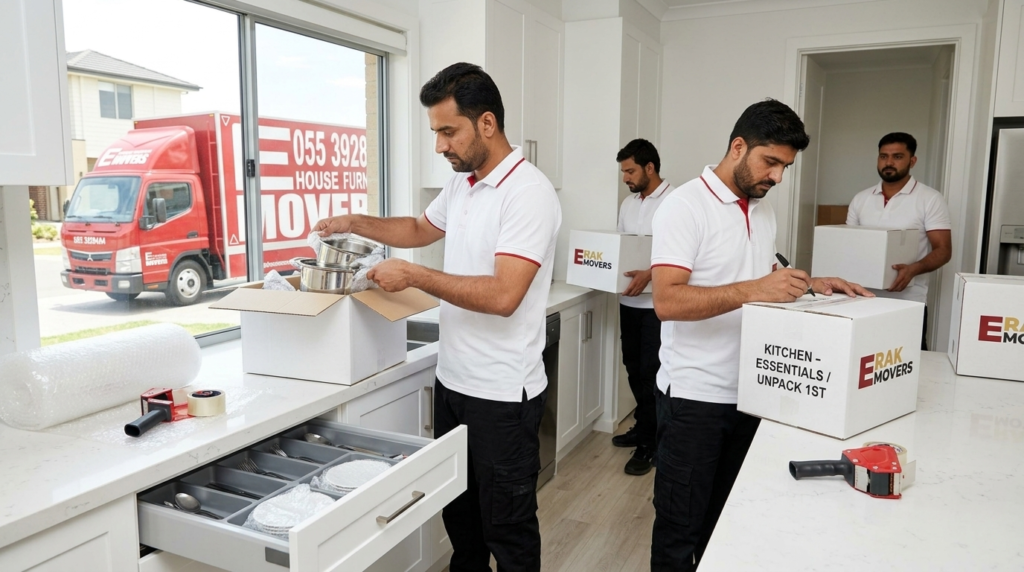
Use sturdy cartons, suitable cushioning and dividers where appropriate. Protect each piece individually, prevent movement and avoid putting heavy cookware above delicate items.
Follow these 8 steps:
- Check and reinforce the carton
- Cushion the bottom
- Wrap plates individually
- Stand wrapped plates on edge
- Separate glasses
- Protect stems and handles
- Fill empty spaces
- Finish with top cushioning
For bowls, place cushioning between pieces and avoid tightly nesting an unprotected stack. Pack heavy ceramic bowls separately from thin glasses.
Do not use towels as the only protection for every fragile item. They can help fill space, but you still need appropriate separation and support.
Before sealing, check gently for movement. If the contents shift, adjust the cushioning. A fragile label identifies the risk; the packing must provide the protection.
Photograph valuable sets and note existing chips before wrapping. For unusually delicate pieces, discuss fragile-item handling during the assessment.
How to Pack Kitchen Appliances
Use original cartons and fitted inserts when they are still sound. Otherwise, choose sturdy, suitably sized cartons and cushioning that supports the appliance without pressing on controls, glass or projecting parts.
Prepare each appliance before packing:
| Appliance | Preparation | Keep with it |
|---|---|---|
| Kettle | Empty, cool and dry thoroughly | Power base and detachable parts |
| Toaster | Unplug, cool and remove loose crumbs | Clean crumb tray |
| Blender | Clean and dry; protect the blade assembly | Jug, lid and removable attachments |
| Coffee machine | Empty water and waste containers; follow transport instructions | Drip tray and required accessories |
| Air fryer | Clean and dry the basket and cooking compartment | Basket, tray and removable inserts |
| Microwave | Remove and wrap the glass turntable separately | Roller ring and other removable parts |
Secure cables without pulling them tightly around the appliance. Put small accessories in labelled bags and cushion them so they do not scratch the main unit.
Avoid placing loose blades inside a carton. Use their protective cover or another secure arrangement that prevents anyone reaching onto an exposed edge.
For refrigerators, freezers and dishwashers, check the manufacturer’s preparation instructions. Disconnection, draining, transport position and restart requirements vary. Do not apply a universal waiting time to every fridge after delivery.
Arrange any necessary specialist disconnection before the moving crew arrives. Confirm that the destination has the required connections and space before an appliance is placed in its final position.
How to Handle Pantry, Fridge and Freezer Contents
Use up refrigerated and frozen food during the final week where practical. Smaller quantities are easier to manage, especially when the new fridge may not be ready immediately.
Sort pantry contents separately. Check dates, close containers securely and inspect packaging for leakage or damage. Opened dry foods do not automatically need to be discarded: sound, properly sealed containers can be considered for transport if the mover accepts them.
Keep food separate from cleaning chemicals. Pack bottles upright in suitable leak-resistant containment, and avoid placing them above paper packets or fragile crockery.
For chilled and frozen food, plan the entire period outside suitable refrigeration. A short drive from Al Nakheel to another RAK neighbourhood can still involve packing time, loading, access delays and appliance setup.
Use suitable insulated containers and cooling packs where needed, and minimise the time food spends outside appropriate storage conditions. A household moving truck should not be assumed to provide refrigerated food transport.
The UAE Government’s food safety guidance explains the national framework for protecting food safety and quality. During a household move, make a separate plan for food rather than treating it like another carton of kitchen belongings.
Before moving food, establish:
- Whether your mover accepts it.
- How it will be kept under the required conditions.
- When refrigeration will be available at the destination.
- Who will carry and unpack it.
- What you will do if access or delivery is delayed.
If appropriate conditions cannot be maintained, reduce the quantity beforehand and buy replacements after arrival.
What Goes in the First-Morning Kitchen Box?
The first-morning kitchen box contains the small set of items needed to make drinks, serve breakfast and clean up. Pack for your household’s actual routine rather than assembling a second complete kitchen.
Use this checklist:
- Kettle and power base.
- Mugs or reusable cups.
- Tea, coffee and sugar, if used.
- Drinking water.
- Plates or bowls for each person.
- Basic cutlery.
- One pan and a suitable utensil, if breakfast requires cooking.
- Shelf-stable breakfast food.
- Children’s familiar cups and utensils.
- Small chopping board.
- Safely protected knife, if needed.
- Washing-up liquid, sponge and tea towel.
- Kitchen roll and rubbish bags.
- Scissors or a safely stored carton opener.
Keep chilled breakfast ingredients in the appropriate food container, not in this box. Transport cleaning liquids separately from food and contain them against leaks.
At the new home, clear one worktop, check that the equipment can be used safely and open this carton first. Set up drinks and basic food preparation before unpacking everyday cookware. Serving dishes and occasional appliances can wait until you have decided where they belong.