
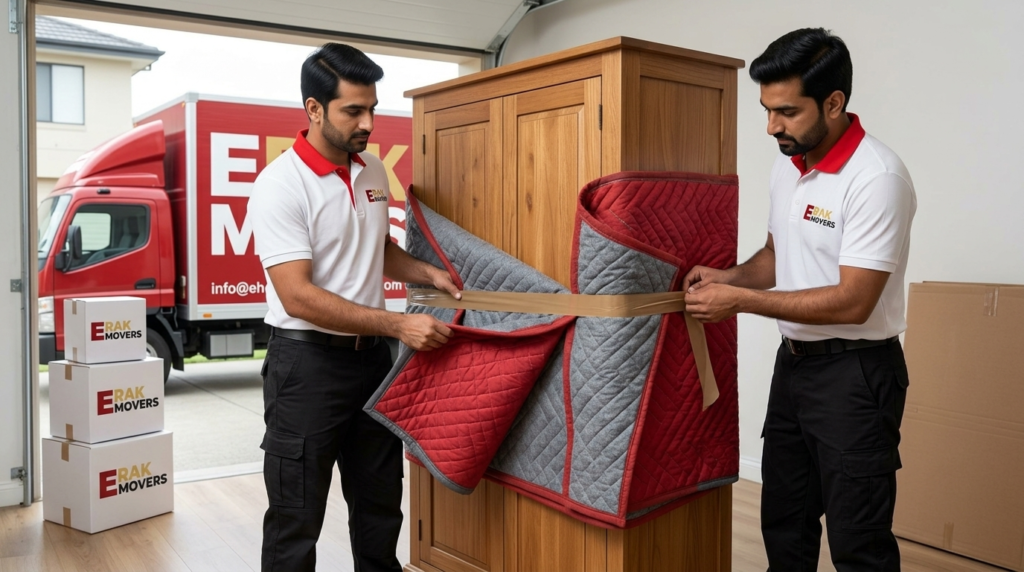
A scratched dining table does not always mean someone dropped it. The damage might start with grit inside a moving blanket, a strap pressing against an unprotected edge or a doorway nobody measured.
Furniture can suffer damage at several points during a move. Understanding the cause helps you ask better questions before packing begins. This guide explains how surface protection, structural condition, truck positioning and access planning affect your furniture, with practical checks for a move in Ras Al Khaimah.
Where Does Furniture Damage Actually Happen During a Move?
Furniture damage can happen during wrapping, dismantling, carrying, loading, transport or reassembly. The visible mark may appear late, but its cause can begin earlier: unsuitable packing material, an unsupported joint, poor load restraint or an access route that requires an unplanned manoeuvre.
Consider a wardrobe carried through a narrow corridor. Its corner might strike the doorframe during a turn, but the earlier mistake could be failing to check whether the wardrobe needed dismantling.
The same applies to a polished table. A surface mark discovered after delivery might come from pressure against its wrapping throughout the journey.
Tracing the cause means looking beyond the moment damage becomes visible. It also means checking furniture before wrapping so existing wear is recorded accurately.
How Decisions Before Lifting Can Lead to Damage
Accidents can happen, but several causes of furniture damage are predictable enough to address beforehand.
The key decisions include:
- Whether the item should travel assembled or dismantled.
- Which material can safely touch its surface.
- Where its weight should be supported.
- How it will pass through doors, lifts and stairwells.
- Where it will sit in the truck.
- How it will be restrained without crushing vulnerable parts.
These decisions work together. Extra wrapping cannot strengthen a failing joint, and careful lifting cannot make an oversized cabinet fit through an unsuitable doorway.
For example, a dining table with loose legs may look stable while standing still. Once lifted and tilted, its weight places different demands on the connections. Checking those connections first gives the crew an opportunity to choose a safer handling method.
A useful survey therefore covers more than the number of furniture pieces. It should identify the items that need special preparation and explain why.
How the Wrong First-Contact Material Causes Damage
The first-contact material is the layer placed directly against the furniture. Its cleanliness and suitability matter because every outer layer can press it more firmly against the surface.
A blanket containing grit can scratch a finish when it moves. Adhesive tape applied directly to furniture may leave residue or lift a delicate coating. Tight wrapping can also press hard fittings against nearby surfaces.
Different materials need different protection:
| Furniture surface | Potential problem | Preparation to discuss |
|---|---|---|
| Polished or lacquered wood | Scratches, impressions or adhesive damage | A clean, non-abrasive layer compatible with the finish |
| Veneered panels | Chipped edges or lifted material | Edge protection and careful tape placement |
| Upholstery | Dirt transfer, moisture or pressure marks | Clean, dry protective covering |
| Glass | Scratches, chipped edges or breakage | Suitable padding, edge protection and supported handling |
| Stone tops | Chipped corners or cracking under stress | A handling plan based on weight, shape and support needs |
Do not assume a thicker bundle is automatically safer. The protection must suit the furniture underneath it.
Freshly refinished pieces deserve particular attention. Tell the movers about recent painting, polishing or restoration, and follow the finish manufacturer’s guidance before wrapping.
Check that surfaces and coverings are dry. Sealing moisture against furniture can create problems even when the item arrives without an impact mark.
How Unidentified Structural Weak Points Cause Damage
Furniture is designed to support weight in particular ways. Moving it changes those forces, especially when it is tilted, lifted unevenly or carried over a threshold.
Potential weak points include:
- Loose table legs and chair joints.
- Damaged screw holes in flat-pack furniture.
- Cracked cabinet bases.
- Previously repaired frames.
- Long unsupported shelves or panels.
- Heavy tops attached to lighter bases.
- Loose hinges and drawer runners.
A component that works during ordinary use may not be a suitable lifting point. Armrests, decorative trims, drawer handles and overhanging tops should not automatically be treated as carrying grips.
Before moving, identify loose parts and previous repairs. Empty drawers and cupboards unless the crew has specifically assessed and approved another arrangement.
Dismantling can reduce size and improve handling, but it also needs judgement. Repeatedly removing fittings from worn engineered-board panels may weaken their fixing points. Some furniture requires specialist attention rather than routine disassembly.
Photograph connections before dismantling, label matching parts and keep hardware in clearly identified bags. These steps help avoid forcing the wrong fitting into a panel during reassembly.
How Transit Position Causes Damage
Furniture does not need to fall over to suffer damage inside a truck. Small repeated movements can rub surfaces, loosen components or bring unprotected edges into contact.
Positioning problems include:
- Heavy cartons resting on vulnerable furniture.
- Unsupported panels bending under load.
- Furniture touching exposed metal or hard fittings.
- Gaps that allow items to move.
- Straps pressing directly against delicate corners.
- Pieces resting on components not designed to bear their weight.
The loading plan should provide suitable support and separation, followed by restraint appropriate to the item and vehicle.
More strap tension is not always better. Excessive pressure can mark upholstery, crush edges or strain a weak frame. Protective padding and sensible restraint placement matter as much as keeping the load still.
Orientation also requires care. Turning a sofa, cabinet or table onto its side changes where its weight rests. The crew should assess whether that position suits its construction.
A short move within Ras Al Khaimah still involves braking, turning and road vibration. Distance alone is not a reason to skip proper load preparation.
How Unmeasured Access Routes Cause Damage
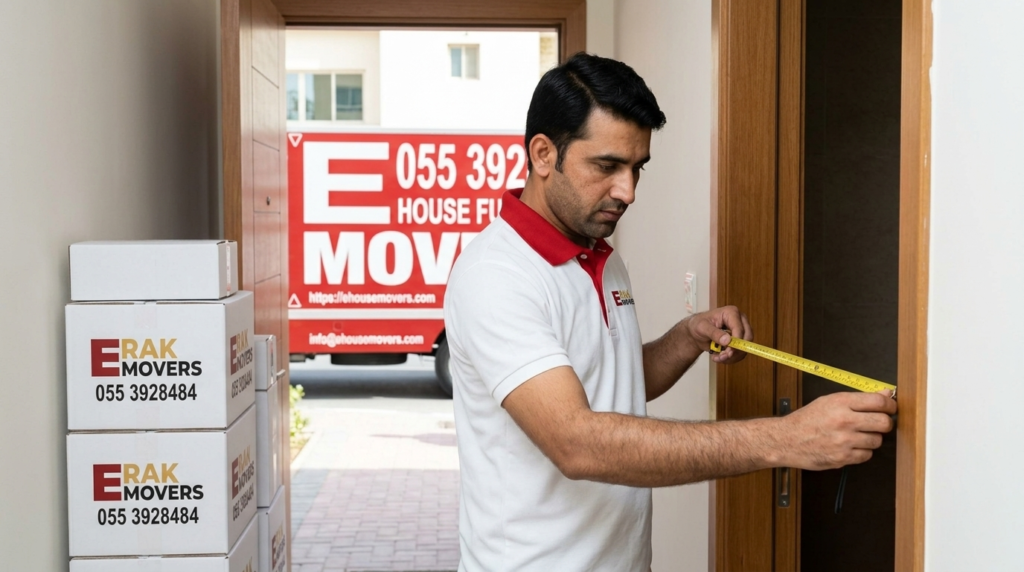
A furniture item may fit through the front door but fail at the corridor turn immediately beyond it.
Check the complete route at both properties:
- Door openings and projecting handles.
- Corridor width and turning space.
- Lift-door clearance and usable cabin dimensions.
- Staircase turns and landing space.
- Low ceilings or overhead fittings.
- Steps and uneven thresholds.
- The path between the building entrance and the truck.
Measure the furniture in its intended moving condition, allowing for protective wrapping and handling space.
For an apartment move, confirm the service lift arrangements with building management. For a villa, check garden gates, entrance steps and any narrow internal turns. A wide driveway does not guarantee an easy route into every room.
If a piece will not pass comfortably, agree on the solution before lifting begins. Suitable dismantling or a separately assessed specialist method may be needed.
Trying different angles while holding a heavy item increases the chance of catching a corner, twisting a frame or damaging the property.
Which Stages of a Move Need the Closest Checks?
There is no reliable basis here for declaring one stage responsible for most furniture damage. Each stage creates a different exposure, and damage discovered during unpacking may have occurred much earlier.
Use the following checks throughout the move:
| Moving stage | What can go wrong | What to check |
|---|---|---|
| Before packing | Existing damage goes unrecorded | Photograph surfaces, edges and joints |
| Wrapping | Unsuitable or dirty material touches the finish | Inspect the contact layer and tape placement |
| Dismantling | Panels or fittings are strained | Confirm the method and label components |
| Carrying | Weak points take weight or corners strike obstacles | Agree on support points and clear the route |
| Loading | Items receive unsuitable pressure or support | Check separation, positioning and restraint |
| Transit | Movement creates rubbing or impact | Ensure the load was secured appropriately |
| Unloading | A different access problem appears | Check the destination route beforehand |
| Reassembly | Incorrect fittings or force damage connections | Match components and check stability |
Inspect furniture as it is unwrapped where practical. This helps identify concerns while the crew can still examine the item and its packaging.
How to Prevent Each Cause of Furniture Damage
Turn each identified risk into a specific instruction before the move.
| Identified cause | Preventive action |
|---|---|
| Surface-sensitive finish | Agree on compatible protective materials |
| Existing loose joint | Record it and assess repair or dismantling needs |
| Heavy removable component | Plan separate handling where appropriate |
| Vulnerable edge or corner | Add suitable protection before carrying |
| Restricted access | Measure and agree on the route |
| Unsupported truck position | Provide suitable support and separation |
| Pressure from restraints | Protect contact points and avoid excessive force |
| Confusion during reassembly | Label parts and retain assembly instructions |
When arranging furniture movers in Ras Al Khaimah, share photographs of unusual pieces, existing weaknesses and difficult access points. Ask for the agreed packing and handling scope to appear in the quotation.
Keep that quotation, your invoice and condition photographs together. The Ministry of Economy and Tourism’s consumer complaint service requests supporting documents such as invoices or contracts, which makes retaining a clear record useful if a service dispute arises.
If you notice damage, photograph it and notify the mover promptly in writing. Follow the agreed reporting procedure and keep relevant packaging available for inspection.
Protect Your Furniture Before the First Lift
Furniture protection begins with understanding the piece: its finish, weak points, weight and route through the property. Wrapping, carrying and loading should follow that assessment.
Before your move with RAK E Movers, identify the furniture needing extra care and agree on how it will be handled. Clear decisions before lifting help reduce avoidable scratches, broken connections and difficult surprises at delivery.