
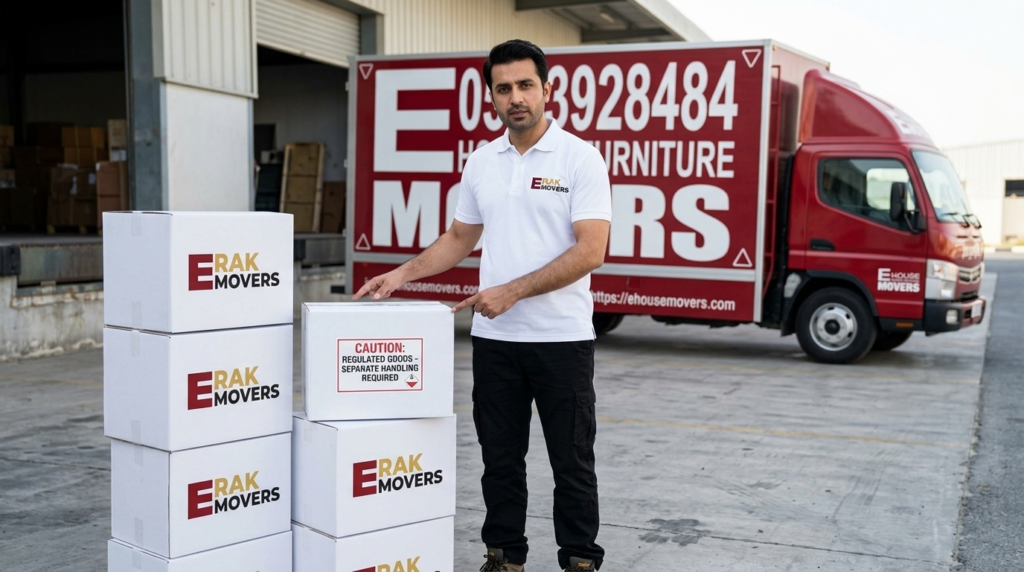
A gas cylinder on the balcony, frozen food in the kitchen and leftover paint in a cupboard can cause last-minute problems on moving day. These belongings need a different plan from your furniture and ordinary household boxes.
Before moving in Ras Al Khaimah, check which items your moving service accepts and which need separate arrangements. This guide explains common exclusions, the difference between local moving restrictions and customs rules, and how to clear unsuitable items before the truck arrives.
What Will Movers Not Pack or Transport in the UAE?
Ordinary household moving services generally exclude hazardous materials such as fuel, gas cylinders, explosives and dangerous chemicals. Perishable food, plants and certain other belongings may require separate arrangements. Acceptance depends on the item, transport conditions, route and the moving company’s written terms.
Use the following checklist when reviewing your belongings:
| Item category | Common examples | What to arrange |
|---|---|---|
| Flammable liquids | Petrol, lighter fluid, paint thinner | Keep outside the household shipment and seek suitable collection or disposal |
| Pressurised containers | LPG cylinders, camping cartridges, certain aerosols | Ask the supplier or an appropriate specialist about handling |
| Hazardous chemicals | Pesticides, corrosive cleaners, pool chemicals | Declare the exact product before packing |
| Perishable food | Frozen meals, fresh meat, dairy products | Use beforehand or arrange suitable temperature-controlled transport |
| Regulated goods | Controlled medicines, weapons, ammunition | Check the applicable rules and authorised handling requirements |
| Living things | Plants, pets, aquarium livestock | Agree on separate suitable transport |
| Personal essentials | Passports, cash, jewellery, daily medication | Keep with you throughout the move |
Personal essentials are different from hazardous goods: they belong with you because they need close supervision or immediate access.
Similarly, a moving company’s exclusion does not automatically mean an item is illegal to own. Some goods simply fall outside an ordinary household transport service.
Which Flammable and Pressurised Items Are Excluded?
Treat fuel, gas cylinders and hazardous chemicals as items requiring advance discussion. Do not hide them inside sealed cartons or assume a small quantity makes them suitable for the truck.
Check your kitchen, balcony, utility cupboard and garage for:
- LPG cooking cylinders and camping gas cartridges.
- Petrol, diesel and lighter fluid.
- Paint thinners, solvents and solvent-based paints.
- Spray paints and other flammable aerosols.
- Strong acids, corrosive cleaning products and pesticides.
- Fireworks and ammunition.
- Equipment containing fuel, such as certain garden tools.
A cylinder that appears empty can still contain residual gas. Contact the cylinder supplier about collection or approved handling rather than attempting to release the remaining gas yourself.
Paint and cleaning products need individual checks. Water-based paint does not have the same properties as solvent-based paint, and ordinary detergent differs from a corrosive cleaner. Share photographs of labels and hazard symbols with the moving team so the decision concerns the actual product.
Keep products in their original containers. Do not combine leftovers, remove labels or transfer chemicals into drinks bottles.
For fuel-powered equipment, follow the manufacturer’s preparation instructions and agree on transport requirements before moving day. A verbal description such as “small gardening machine” may leave important details unclear.
Which Perishables Are Excluded?
Do not plan to send chilled or frozen food in an ordinary furniture truck. Household moving vehicles are not automatically equipped to maintain the temperatures these products require.
Items needing a separate plan include:
- Frozen meat, fish and prepared meals.
- Milk, yoghurt and other chilled dairy products.
- Refrigerated leftovers.
- Fresh food that needs controlled storage.
- Open containers likely to leak or spill.
Even a short drive can involve a longer period outside refrigeration. Packing, lift bookings, loading and unloading all add time.
Reduce food shopping before your move and use suitable supplies from the fridge and freezer. For anything you intend to keep, arrange appropriate transport and have the receiving fridge or freezer ready.
Ask separately about sealed, shelf-stable food such as rice, pasta and unopened tins. These do not present the same temperature concerns, although packaging, pests, storage arrangements and international import rules can still affect acceptance.
Empty the fridge and freezer before collection. Follow the appliance manufacturer’s instructions for defrosting, drying and restarting them.
Which Regulated Goods Require Separate Handling?
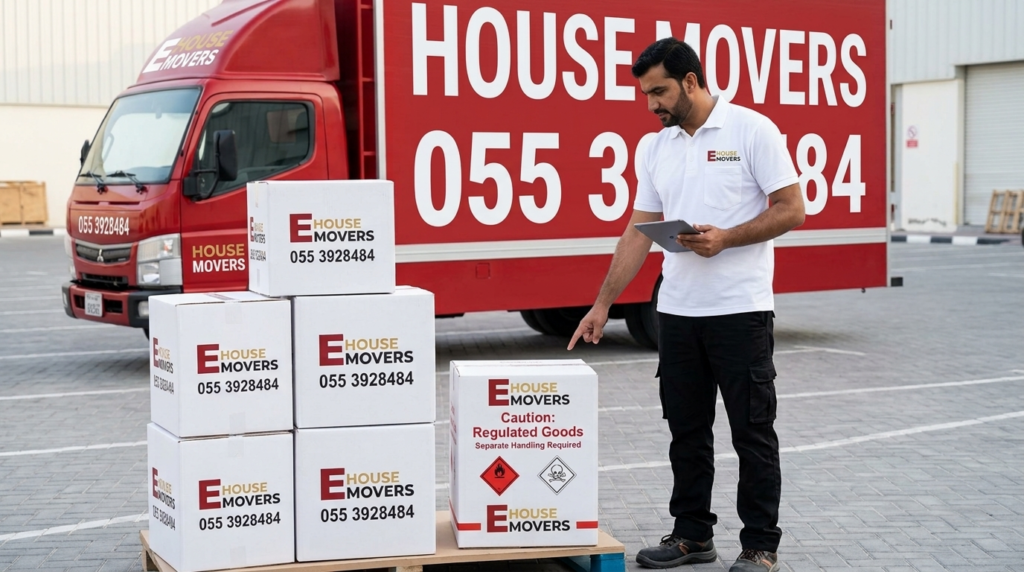
Some belongings require checks beyond the moving company’s packing policy, particularly when the shipment crosses an international border.
The official Dubai Customs distinction between prohibited and restricted goods explains that restricted imports or exports require approval from the competent authority. Its listed categories include pharmaceutical products, plants, arms, ammunition and fireworks.
These are border controls. They should not be presented as blanket rules for every move between two homes within the UAE.
For personal medication, keep the original packaging and relevant prescription documents accessible. Carry daily medication with you so it remains available during packing and delivery. Where a medicine requires particular storage conditions, arrange these separately.
If relocating internationally, check the requirements for the exact medicine and destination before including it in your travel plans. Do not assume permission to possess a medicine in one country means it can be shipped freely into another.
Weapons, ammunition and fireworks must not be added to ordinary household cartons. They require a separate discussion with the relevant authority and an appropriately authorised provider where transport is permitted.
Describe regulated items accurately. Calling something “personal belongings” on an inventory does not remove the rules that apply to it.
How Plants Are Treated in a UAE Move
Plants may be accepted for a local move, but this needs agreement before loading. Their size, pot weight, condition and travel time affect whether they can be handled safely.
Send photographs of larger plants during the survey. Include the pot, stand and approximate dimensions so the team can assess access and space requirements.
Before transport:
- Check for pests and damaged pots.
- Avoid leaving pots waterlogged.
- Secure loose soil and protect surrounding surfaces.
- Keep foliage clear of heavy cartons.
- Arrange an accessible position at the destination.
Ask how the plants will be protected from prolonged heat and whether the agreed service includes handling heavy planters. A small indoor plant and a large ceramic garden pot create very different moving requirements.
International moves require additional checks. Plant species, soil and growing materials can be subject to permits, inspections or destination restrictions. Confirm eligibility before packing; do not assume a favourite houseplant can travel inside your household shipment.
Pets and aquarium livestock also need suitable separate arrangements. They should not travel inside a sealed furniture load.
What to Do With Excluded Items Before Move Day
Start checking cupboards and outdoor storage areas several days before packing. This gives you time to arrange collection, use suitable supplies or organise specialist handling.
Follow these steps:
- Make a separate list. Record questionable items, quantities and product names.
- Send clear photographs. Include labels, hazard symbols and container condition.
- Confirm acceptance in writing. Agree which items can travel and under what conditions.
- Contact suppliers where appropriate. Ask about gas-cylinder returns and product take-back options.
- Arrange suitable disposal. Check with the local waste authority or an authorised provider for hazardous leftovers.
- Separate retained items. Keep personal essentials away from cartons intended for the truck.
Do not pour chemicals into drains or place gas cylinders in ordinary rubbish. Giving something away is only suitable when the product is safe, lawful to transfer and correctly labelled.
When booking packing and unpacking services, mention unusual items during the survey. Clear information helps establish the scope before materials and vehicles are allocated.
Clear Restricted Items Before the Moving Truck Arrives
A smooth move starts with knowing what belongs in the household shipment and what needs another arrangement. Check gas cylinders, chemicals, food, medication and plants early, then confirm any uncertain items with RAK E Movers.
Keep the agreed exclusions beside your packing checklist. Resolving them before moving day protects your belongings and helps the crew begin loading without avoidable interruptions.