```html
Fragile Item Specialists · Dubai

Fragile Item Handling in Dubai

What Protects Your Items Is Not the Bubble Wrap. It Is Every Decision Made Before the Bubble Wrap Goes On.

Specialist Fragile Moving Services Across Dubai — Artwork, Antiques, Chandeliers, Crystal, Mirrors, Marble, and Every High-Value Piece That Deserves More Than a "Handle With Care" Sticker.

Bubble wrap does not protect a fragile item. Bubble wrap is the last layer in a protection sequence that begins long before the first sheet is torn from the roll. What protects a fragile item is the assessment of its surface material — determining whether the first contact layer should be acid-free tissue, glassine paper, or foam, depending on what the surface is and how it responds to pressure and adhesion. What protects it is the identification of its structural vulnerabilities — the joint that has been repaired, the edge where a marble tabletop is thinnest, the crystal drop that carries all of the chandelier's structural weight when suspended from a single wire. What protects it is the confirmation of its transit position before the vehicle is loaded — whether it travels vertically or horizontally, laterally braced or positionally isolated from adjacent loads.

By the time the bubble wrap goes on, every meaningful decision about how an item survives its journey has already been made. The bubble wrap is the confirmation of those decisions — not the substitute for them. RAK E Movers handles fragile and high-value items in Dubai under an assessment-first protocol. Before any protective material contacts any item, the assessor has identified the surface type, the structural vulnerabilities, the appropriate first-contact material, the correct disassembly sequence where applicable, the transit position, and the insurance tier required for the declared value. The crew that arrives on the day is executing a plan confirmed in writing — not making decisions under the time pressure of a moving morning.

Fragile Item Specialists Dubai
Item-Specific Written Protocols
Declared-Value Insurance
4.9-Star Verified Rating
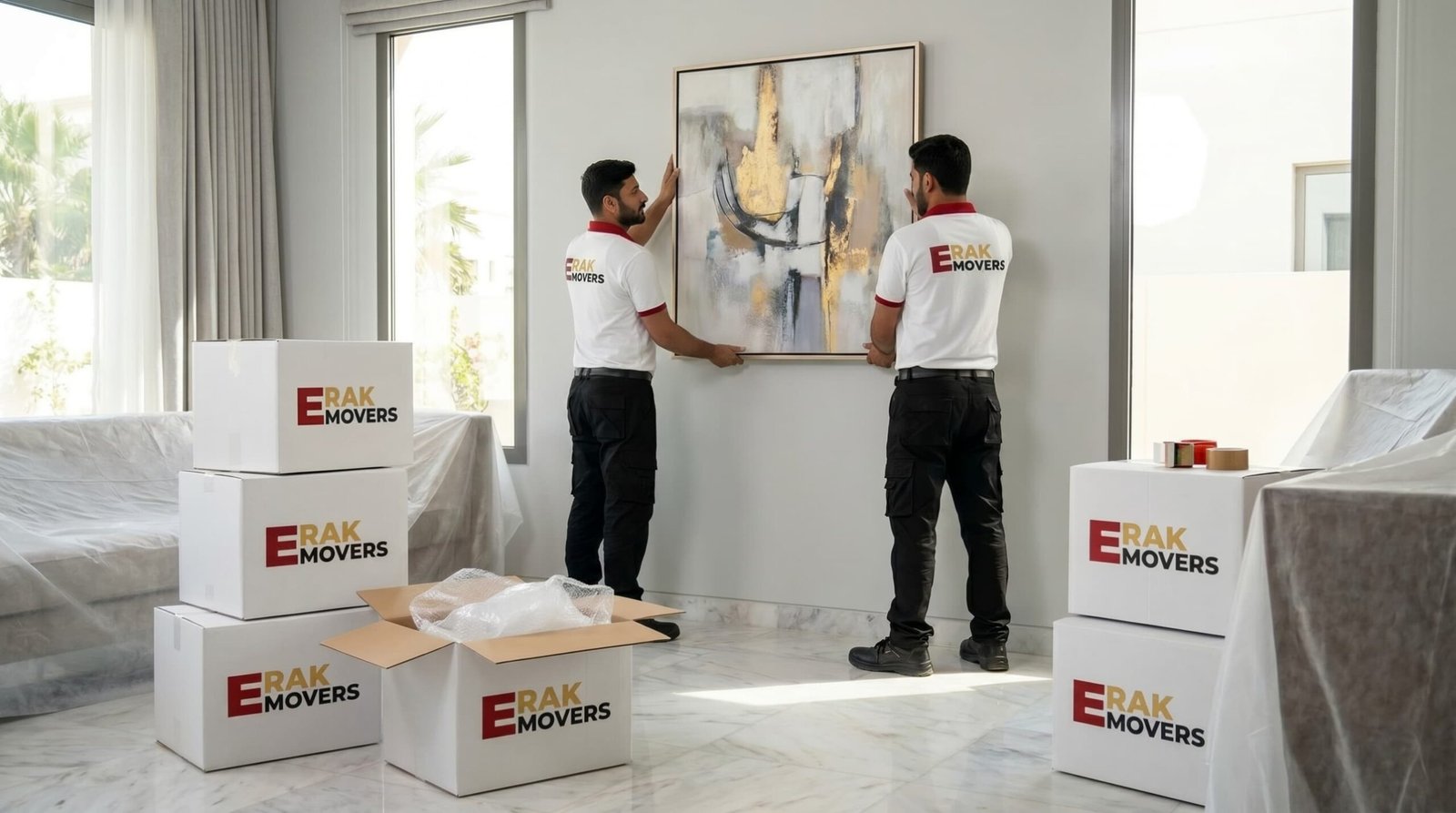
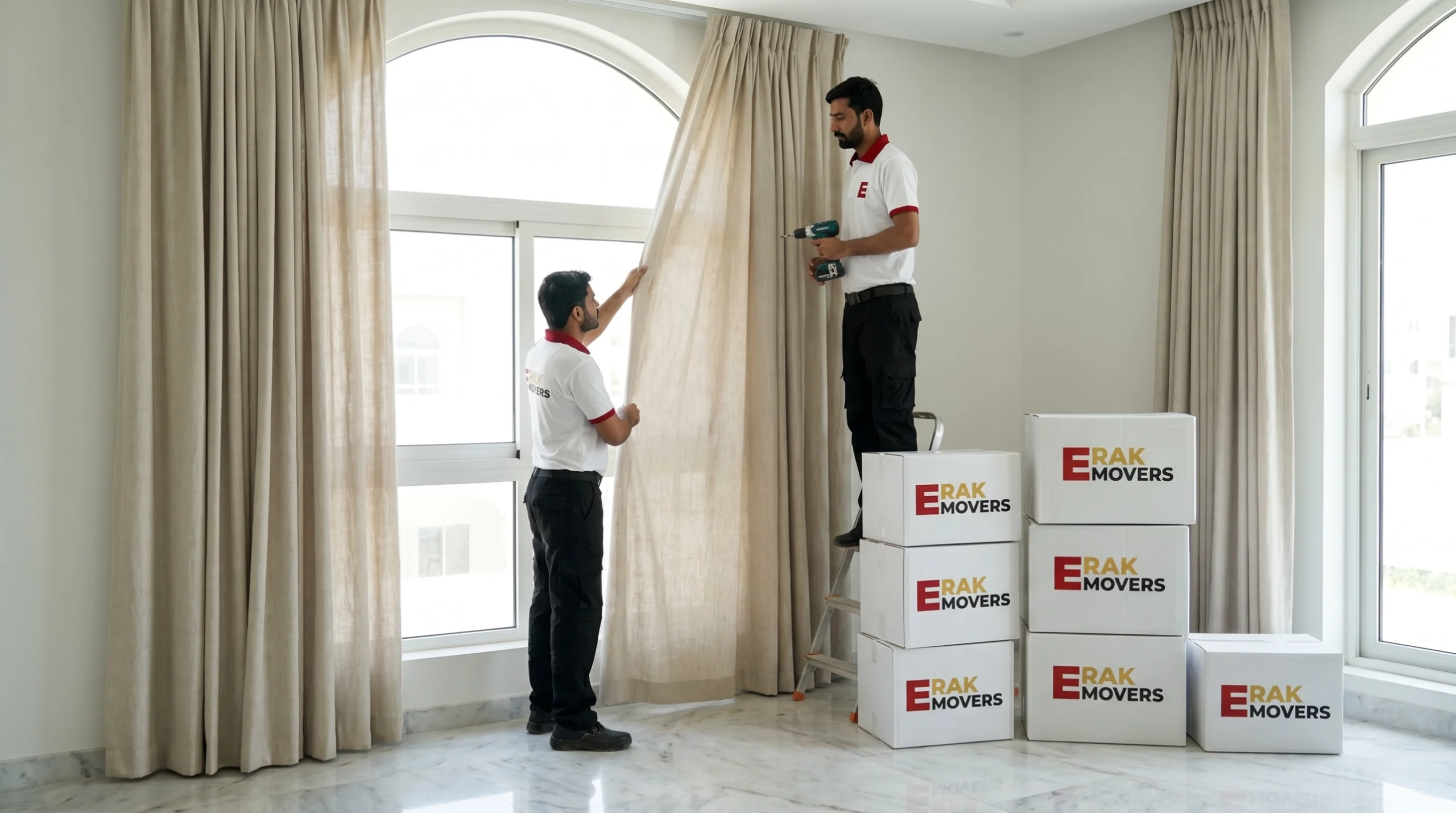
Fragile item handling in Dubai — artwork, antiques, chandeliers, crystal, mirrors, marble
Specialist Service
Artwork, Antiques & High-Value Items Assessment-first protection protocol
```
```html
Fragile Item Protocol

The Decision Chain That Produces Damage — and Why It Almost Never Starts With a Drop

The most persistent misconception about fragile item damage in Dubai moves is that it is caused by accidents — a dropped carton, an impact during loading, a vehicle accident in transit. These events happen. They are not, however, the cause of most fragile item damage in Dubai. Most fragile item damage begins with a decision — usually a small one, made before any item is moved, that creates the conditions for damage without announcing itself as dangerous until the item arrives at the destination and the condition is discovered.

01

The Wrong First-Contact Material

Stretch film applied directly to a polished lacquer surface leaves a contact mark when peeled — not from the film tearing, but from the adhesive residue and the differential expansion between the film and the lacquer surface over a heated Dubai transit period. Bubble wrap applied directly to an unvarnished oil painting surface creates a texture impression in the medium that is not visible until the work is examined in raking light. Standard tissue applied to silver-surfaced items accelerates tarnishing through acid content in the tissue that acid-free tissue does not contain. Each of these failures begins with a material selection made without knowledge of the surface it is being applied to.

02

The Unidentified Structural Vulnerability

A marble dining table that appears visually flawless has a structural weakness at the point where the apron meets the table leg — where the stone transitions from the broad horizontal mass of the tabletop to the narrower vertical dimension of the support structure. Carrying the table at a slight diagonal — the most natural position when navigating a corridor turn — concentrates load at exactly this structural transition point. The damage does not occur in an obvious way. It appears as a hairline crack visible only from beneath the table, discovered when the table is placed in the new property and examined. The structural assessment that identifies this before the carry determines the handling instruction. The absence of the assessment means the damage occurs through a movement that felt entirely controlled throughout.

03

The Unconfirmed Transit Position

A large gilt-framed mirror placed vertically against the truck wall without internal lateral support vibrates at a frequency during road transit that is transmitted through the frame joints. Over a forty-minute drive across Dubai, the cumulative effect of that vibration is a stress fracture along a joint line that the frame was holding together by friction and gravity rather than structural integrity. The same mirror placed vertically in a laterally supported position, isolated from the vibration transmission of the vehicle wall, arrives without the stress accumulation. The transit position decision is made before the loading begins — or it is not made at all, and the mirror determines its own position based on where it fits most conveniently in the load.

04

The Unassessed Access Route

A chandelier that must be carried through a doorframe and down a corridor in an eight-apartment floor has a set of geometrical constraints that determine how many of its pendant components must be removed before the main frame can navigate the route safely. A crew that carries the chandelier assembled through a corridor where the pendant elements contact the doorframe at the turn does not drop the chandelier. The chandelier arrives apparently intact. The damage is discovered when the new owners turn on the lights and find that three crystal drops that contacted the doorframe have micro-fractures that become visible under illumination.

05

RAK E Movers Interrupts the Decision Chain

RAK E Movers interrupts this decision chain at each point — through an assessment that identifies surface materials, structural vulnerabilities, access route constraints, and transit positions before a single item is packed or moved.

Each variable above is documented during the on-site fragile item assessment or the photo-based virtual assessment for smaller pieces. The written handling protocol produced within 24 hours of assessment completion specifies how each decision point affects the packing materials, crew configuration, and execution timeline. Surprises do not happen on move day because every decision was captured during the planning stage.
```
```html
Material Protocol

The Right Material for the Right Surface — Confirmed Before the Crew Departs

Every packing material in the RAK E Movers fragile item scope is confirmed in the written handling plan before the crew is assigned to the booking. No material is selected at the van door on the day based on what is available. The material hierarchy below is the reference system for all fragile item engagements.

Material 01

Glassine Paper — First Contact for Unvarnished and Sensitive Fine Art Surfaces

Moisture-resistant, acid-free, non-fibrous, and non-adhesive. The correct first-contact material for unvarnished original paintings, works on paper, pastel and charcoal works, and any artwork surface where texture or adhesion from alternative materials would cause permanent damage.

01
02
Material 02

Acid-Free Tissue Paper — First Contact for Antiques, Gilding, and Chemically Sensitive Surfaces

Manufactured without the residual acid content present in standard tissue paper. The correct first-contact material for gilded frames, gilded decorative objects, patinated bronze and silver surfaces, unglazed ceramics, and antique finishes where acid contact causes accelerated surface deterioration.

Material 03

White Cotton Gloves — Direct Handling of Metallic, Signed, and Patinated Surfaces

Prevent skin oil transfer to silver, gold, bronze, and sensitive art surfaces. Worn by all crew members handling these categories throughout the packing, loading, and placement process.

03
04
Material 04

Foam Corner and Edge Protectors — First Structure Layer

Applied to all four corners of framed artwork and mirrors before any secondary protective layer. Applied to all four edges of marble and stone tabletops before blanket wrapping. The most effective single measure against the most common fragile item damage mode — corner and edge impact.

Material 05

Bubble Wrap — Secondary Protection Layer, Bubbles Always Outward

Applied over the first-contact material layer — never directly on polished, lacquered, or chemically sensitive surfaces. Bubble side always faces outward, ensuring pressure points of the bubbles are directed away from the item surface. Used as a secondary layer for crystal, glass, ceramics, artwork, and all high-value decorative items.

05
06
Material 06

Custom-Cut Foam Beds — Form-Specific Structural Support

Pre-cut to the confirmed item profile at the assessment stage — not improvised from available foam offcuts on the day. Used for sculptures, complex-form decorative objects, and any item where flat padding does not provide adequate form-specific support throughout transit.

Material 07

Furniture Blankets — Primary Outer Layer for Furniture and Large Items

Applied over first-contact or foam layers on all wooden, upholstered, and cabinet surfaces. Never applied as a first-contact layer on sensitive or chemically reactive surfaces without a prior non-adhesive protective layer.

07
08
Material 08

Custom Timber Crates — For Items Where Carton Protection Is Structurally Insufficient

Constructed to the specific dimensions of the item confirmed at assessment. Interior foam-lined to absorb transit shock without applying compressive force to the item's outer protective wrapping. Used for chandeliers, oversized mirrors, large-format artwork, and any item where the transit risk profile exceeds carton packaging capacity.

Material 09

Stretch Film — External Carton Sealing and Component Bundling Only

Used exclusively for sealing packed cartons externally and for bundling groups of wrapped components during transit. Never applied directly to any furniture surface, leather or fabric, or item surface where adhesive residue or film compression would cause surface damage. This restriction is a written crew briefing requirement on every fragile item engagement.

09
Written PlanBefore crew assignment
Surface AssessmentMaterial selection confirmed
Crew BriefingMaterial restrictions documented
Zero ImprovisationNo van-door substitutions
Request Material Protocol →
```
Standalone Services RAK E Movers fragile item specialist handling service in Dubai
Standalone Services

Your Valuables Do Not Need to Be Part of a Full Home Move to Receive Specialist Handling

RAK E Movers provides fragile item handling as a standalone service across Dubai — for single items, small collections, and any scenario where specialist handling is required without a full residential moving scope.

  • Single-Item Handling and TransportOne piece, from one Dubai address to another, with the full assessment, protection, and insurance protocol applied.

  • Art Collection TransportPrivate art collection movement between two Dubai addresses or into storage, with collection-level condition documentation and declared-value insurance.

  • Antique Dealer and Gallery TransportInventory or acquisition transport between commercial and residential Dubai addresses.

  • Pre-Move Specialist PackingFragile item specialist packing completed days before the main moving crew arrives, integrating specialist cartons into the overall move inventory.

  • Storage-to-Home DeliverySpecialist fragile items collected from a Dubai storage facility and delivered with the same handling standard applied at the original move.

  • Showroom-to-Residence DeliveryHigh-value decorative pieces collected from an Al Quoz or Dubai Design District showroom and delivered to a residential address with full installation support.

  • Fragile-Only Extraction from a Home MoveWhere a customer is self-managing the majority of a move but wants specialist handling for specific high-value or irreplaceable items only.

Every standalone fragile item service operates under a written fixed-price contract, with pre-move condition documentation and the insurance tier appropriate to the declared values of the items in scope.

Insurance Coverage

When the Item Cannot Be Replaced the Insurance That Reflects Its Actual Worth

Standard goods-in-transit insurance applied to a general home or furniture move covers individual items up to a per-item ceiling that may be significantly below the declared or market value of high-value fragile pieces. A policy that covers an individual item up to AED 10,000 provides no meaningful protection for an original oil painting with a gallery valuation of AED 75,000, a Murano glass installation valued at AED 35,000, or a chandelier commissioned to specification at AED 50,000.

Tier 1

Standard Goods-in-Transit Coverage

Baseline CoverageIncluded on all bookings

Covers Physical loss or damage to items during loading, transit, and unloading up to the standard per-item ceiling confirmed in the policy document issued at booking.

Tier 2

Extended Declared-Value Coverage

Item-Specific PolicyIssued before move day

For items Where the declared replacement or market value exceeds the standard Tier 1 ceiling. The extended policy names each high-value item individually, records the declared value with supporting documentation, and confirms the premium rate applied.

Note on policy documentation and underwriting: RAK E Movers' fragile item insurance operates on three tiers. Tier 2 extended policies are issued before move day — the customer holds the policy document before any item is wrapped. Tier 3 specialist insurance is facilitated through specialist underwriters with category-specific expertise and knowledge of the UAE art and antiques market. All insurance tiers operate under written fixed-price contracts with pre-move condition documentation.
Our Clients

The Dubai Residents and Businesses Who Trust the Assessment Before the Wrapping

Dubai's diverse community of residents and businesses entrusts RAK E Movers with fragile and high-value items — where professional assessment and specialist handling protocols matter most before any item is wrapped or moved.

Private Art and Collection Owners

Dubai's private art and collectibles market is among the most active in the region — with residents accumulating original works through gallery acquisitions, international auction houses, regional art fairs, and direct artist commissions. Moving a personal collection between two Dubai addresses, from a Dubai property into climate-controlled storage, or out of Dubai on an international shipment, requires the same assessment standard that a commercial gallery applies to its inventory.

Families With Generational Heritage Items

Inherited crystal, antique furniture, handcrafted decorative pieces, silverware, and family heirlooms carry a personal value that cannot be quantified in insurance terms. These are the items where handling quality matters most precisely because insurance money cannot replace them. The RAK E Movers assessment protocol applies the same rigour to a grandmother's porcelain tea service as to a gallery-documented original artwork.

Interior Design Clients and High-End Homeowners

Dubai's premium residential market supports a significant population of homeowners whose properties contain commissioned artwork, statement lighting, custom furniture, and specialist decorative objects sourced from international galleries, auction houses, and luxury retailers. When these properties are sold, renovated, or relocated, the contents require a handling standard commensurate with their acquisition investment.

Antique Dealers, Galleries, and Art Advisors

Professional antique dealers, commercial galleries, and art advisory clients moving inventory, acquired items, or collection contents between storage, commercial, and residential addresses in Dubai require a handling service that maintains the condition standard expected in professional art and antiques commerce.

Hotel and Hospitality FF&E Clients

Hotel and hospitality fitouts contain high-value commissioned artwork, branded decorative objects, custom lighting installations, and specialist display pieces that move between storage facilities, supplier locations, and guest-facing spaces during renovation and refurbishment cycles.

Departing Expatriates With Valued Collections

International moves from Dubai frequently include fragile items the client cannot trust to standard sea freight packing — original artwork, antique collections, crystal services, and high-value decorative pieces that require specialist handling for the international freight leg, export-standard crating, and declared-value insurance coverage for the full door-to-door journey.

Handling Standards

Six Handling Standards Confirmed in the Written Plan Before the Crew Departs

Every fragile item move at RAK E Movers follows six documented handling standards — confirmed in writing before the crew departs, before any item is wrapped, and before the booking deposit is taken.

01 Standard

The Assessment Happens Before the Material Is Selected

The correct protective material for every fragile item in the RAK E Movers scope is confirmed at the assessment stage — before the crew is assigned, before the vehicle is loaded, and before the packing day begins. No crew member makes material selection decisions on the day based on what is available. The material is specified in the written handling plan. The crew executes the plan.

02 Standard

Condition Is Photographed Before the First Protective Layer Is Applied

The pre-move condition record for every fragile item — photographs of every surface, every edge, and every pre-existing mark — is completed before any protective material contacts the item. The customer signs the condition record at origin. This document is the evidence baseline for any post-move conversation about item condition. Without it, both parties rely on memory. With it, both parties refer to a document.

03 Standard

Structural Vulnerabilities Are Named Before the Handling Instruction Is Given

The assessor does not give the crew a general instruction to be careful with fragile items. The assessor gives the crew a specific instruction for each item: where the structural failure point is, which carry angle to avoid, which load positions are prohibited in the vehicle, and what the disassembly sequence is where applicable. The specific instruction prevents the damage that the general caution does not.

04 Standard

Packing Materials Are Confirmed in the Written Contract

The protective material sequence for each fragile item or item category is named in the written contract before the booking deposit is taken. The customer knows before move day that the unvarnished artwork will have acid-free glassine paper as its first contact layer, that the marble tabletop edges will have foam protection before blanket wrap, and that the chandelier drops will be individually wrapped and individually compartmented. What the contract specifies, the crew delivers.

05 Standard

Insurance Is Issued Before Any Item Is Touched

The goods-in-transit insurance policy document — including the underwriter's name, the policy reference, the coverage scope, and the claims procedure — is issued at booking confirmation. For items above the standard per-item ceiling, extended declared-value coverage is arranged and documented before move day. The customer holds a written insurance certificate before a single fragile item is wrapped.

06 Standard

Specialist Items Are Assigned to Crew With Category-Specific Experience

Piano moves are handled by crew members who have moved pianos before. Chandelier dismantling is handled by crew members who have dismantled chandeliers before. Antique furniture is handled by crew members briefed specifically on the structural vulnerabilities identified at the assessment for that property's items. Specialist handling is a crew assignment decision — not a general caution applied to the nearest available team.

Fragile Item FAQ

Fragile Item Handling Dubai Every Question Answered Before the Assessment

Specialist packing, insurance tiers, chandelier dismantling, single-item moves, and international fragile handling — the questions every Dubai customer asks before booking fragile item services.

Don't see your question?

Reach a human coordinator on WhatsApp or call. Most fragile-item questions are answered within minutes.

What counts as a fragile item for specialist handling in Dubai?

A fragile item for specialist handling purposes is any item where physical damage during a move would be difficult or impossible to reverse, where the declared or market value warrants coverage above the standard insurance ceiling, or where the item's material or construction requires specific first-contact protective materials that a general moving crew is not trained to select or apply. This includes original artwork, antiques, chandeliers, large mirrors, crystal and glassware collections, antique china, sculptures, musical instruments, high-value decorative pieces, and any item with structural characteristics that create specific transit vulnerability.

How much does fragile item handling cost in Dubai?

Fragile item handling costs depend on the number of items, the specialist packing required per item, any crating requirements for high-value or oversized pieces, and the insurance tier applicable to the declared values. Single-item specialist handling ranges from approximately AED 400 to AED 3,500 depending on item type and complexity. Collection handling scales with item count and packing specification. All costs are confirmed in a written fixed-price contract after the free assessment.

Does RAK E Movers handle chandelier dismantling in Dubai?

Yes. Chandelier dismantling — including individual pendant removal and wrapping, component inventory documentation, main frame crating, and delivery in reinstallation-ready condition — is a standard fragile item handling service. Electrician coordination for origin electrical isolation and destination reinstallation wiring is arranged separately and aligned to the delivery date.

What packing materials does RAK E Movers use for fragile items?

Materials are confirmed in the written handling plan before the crew departs. Acid-free glassine paper is used for unvarnished original artwork. Acid-free tissue is used for antiques, gilded surfaces, and chemically sensitive finishes. White cotton gloves are worn for all direct contact with metallic, signed, and patinated surfaces. Foam corner protectors are applied before bubble wrap on all framed items. Custom-cut foam beds support sculptures and complex-form objects. Custom timber crates are constructed for chandeliers, oversized mirrors, and high-value items. Stretch film is used externally only — never directly on any item surface.

Are fragile items insured during a RAK E Movers move?

Yes. A written goods-in-transit insurance policy is issued at booking confirmation for every fragile item engagement. For items above the standard per-item coverage ceiling, extended declared-value coverage is arranged through partner underwriters before move day. A specialist fine art and antiques insurance option is available for original artwork and antiques where agreed-value coverage and conservation cost coverage are appropriate. The policy document is in the customer's hands before any item is wrapped.

Can RAK E Movers move a single fragile item without a full home move booking?

Yes. Fragile item handling is available as a standalone service for single items or collections — independent of a full residential moving scope. The same assessment protocol, protective materials, condition documentation, and insurance coverage apply to a standalone fragile item move as to a full household relocation.

How does RAK E Movers document the condition of fragile items before the move?

A photographic condition record is completed for every fragile item before any protective material is applied — every surface, every edge, and any pre-existing mark or structural anomaly photographed and described in writing. The customer signs the condition record at origin. This document is the evidence baseline for any post-move conversation about item condition. It is produced regardless of whether the move is a single item or an entire collection.

Can RAK E Movers handle fragile items in an international move from Dubai?

Yes. Fragile item specialist packing integrates with the international moving scope — with export-standard crating applied over the specialist fragile packing for items included in a sea freight or air freight shipment from Dubai. Individually declared values for high-value fragile items are recorded on the UAE customs packing list, and the international insurance covers the full door-to-door transit period for items above the standard coverage ceiling.

What is the difference between standard packing and fragile item specialist packing?

Standard packing uses a general material approach — furniture blankets for large items, standard cartons for household contents, bubble wrap for fragile items as a category. Fragile item specialist packing uses a material-specific approach — the first-contact material is selected for the specific surface type of the individual item, structural vulnerabilities are identified and the handling instruction adjusted accordingly, transit positions are confirmed per item, and condition is documented per item before any material is applied. The difference is the assessment that precedes the wrapping.

How far in advance should I book fragile item handling in Dubai?

For single items and small collections, three to five days allows time for the assessment, specialist material preparation, and insurance confirmation. For large collections, antique pieces, and chandelier dismantling, five to ten days provides the assessment time and crating preparation lead time that complex items require. During peak moving periods, booking earlier improves date availability and gives the assessor more preparation time before the confirmed handling date.
Fragile Item Care

The Item You Cannot Replace Deserves a Company That Understands What Makes It Fragile Before It Decides How to Protect It

There is a version of fragile item handling that ends well by chance — the item happened to be wrapped in a material that did not damage its surface, the crew happened to carry it at an angle that avoided its structural failure point, the transit position happened to prevent the vibration-induced stress that would have appeared after a longer route.
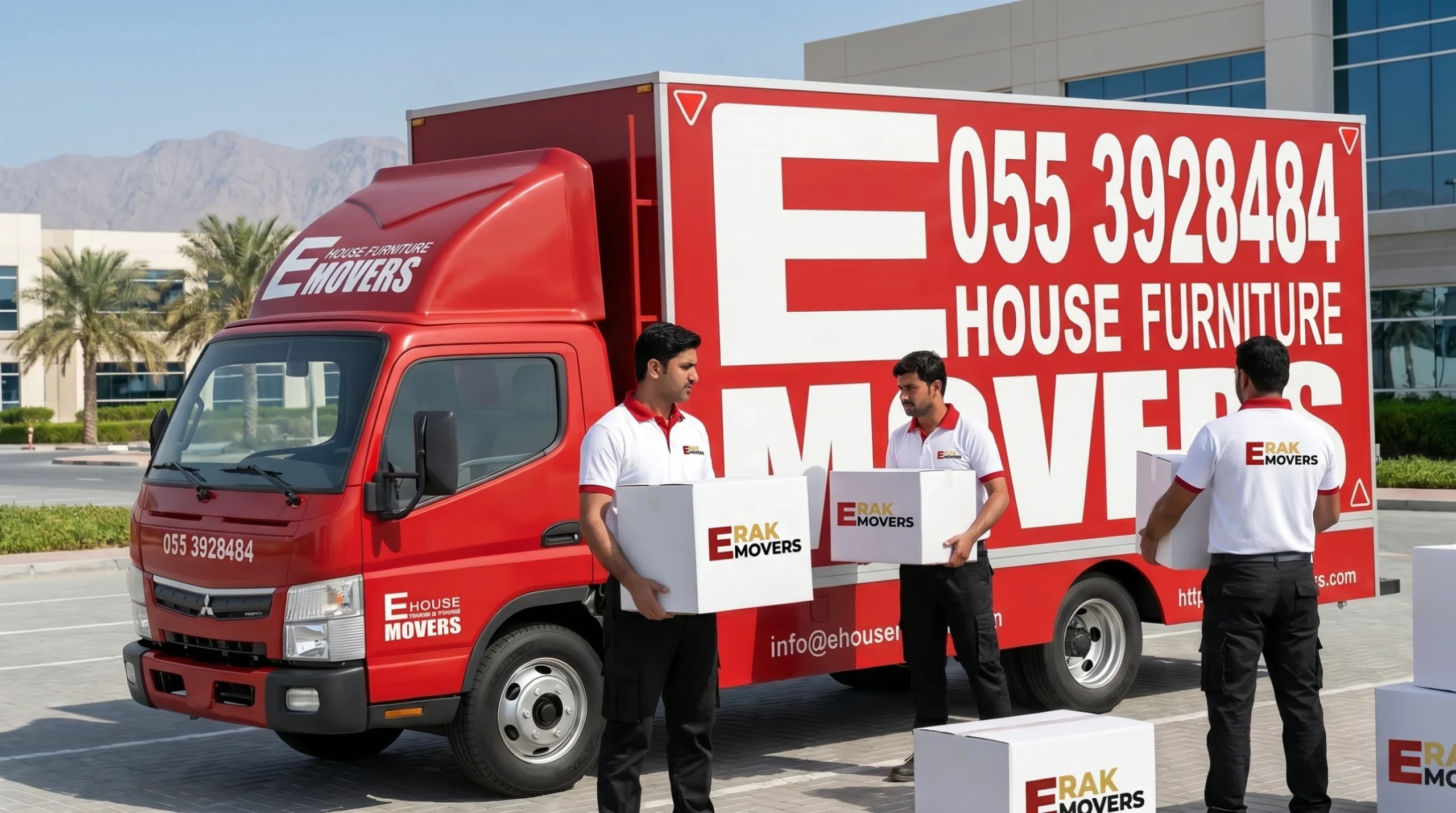
RAK E Movers fragile item specialist handling service

Reach the Fragile Item Team Now

+971501694061Mon–Sun, 8am–10pm
Call →
WhatsAppFastest response for fragile items
Chat →
Quote FormDetailed fragile item assessment request
Open →
Scroll to Top